
“Pioneering fashion activism”
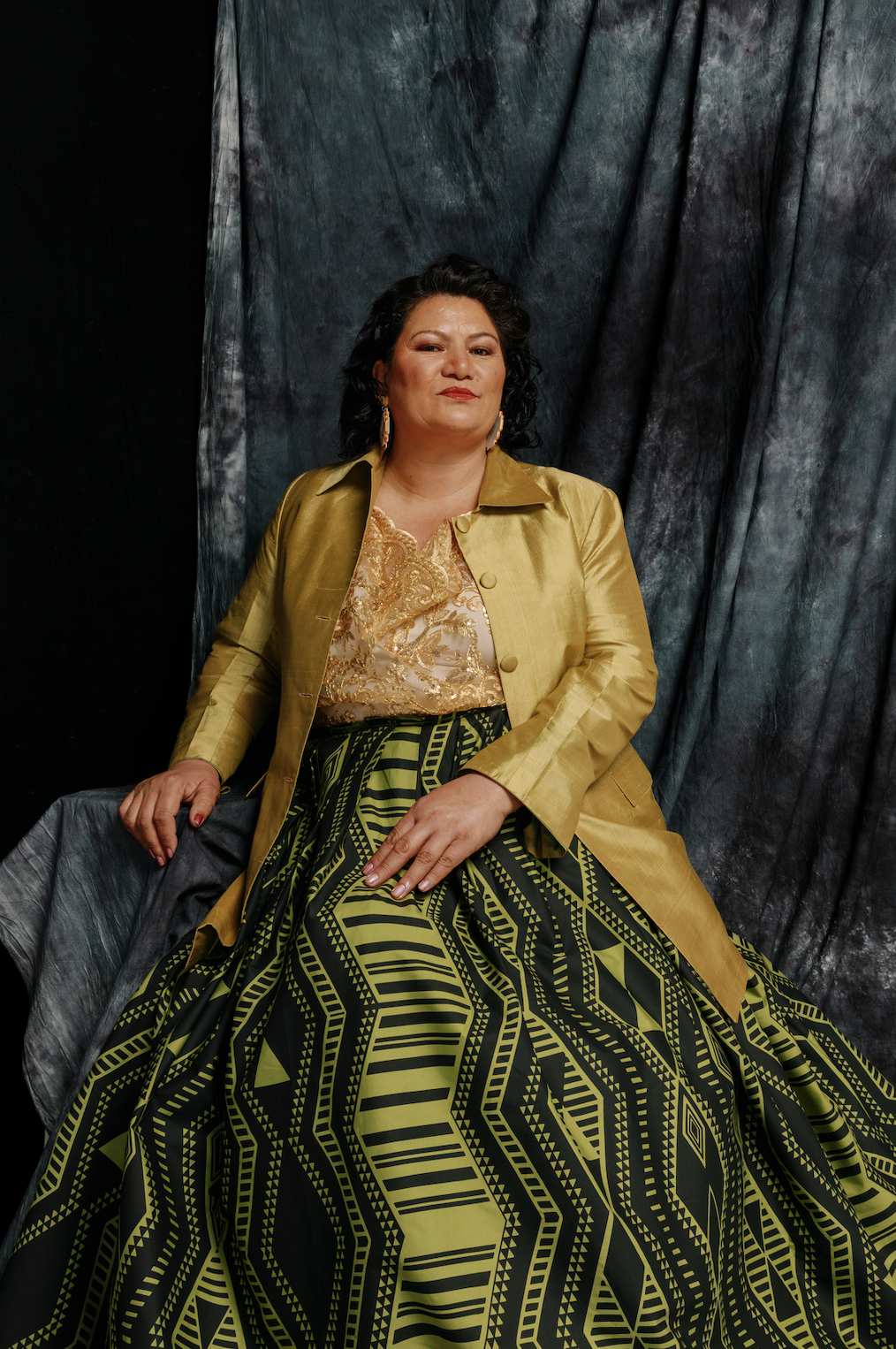
Fashion That Bridges Māori Culture and Slow Fashion
Jeanine Clarkin (Ngāti Hako, Ngāti Pāoa, Ngai Te Rangi, Ngāti Ranginui, Raukawa) is a fashion designer, textile artist, curator, and environmental advocate who has shaped contemporary Indigenous fashion for more than three decades. Widely recognised as the pioneer of urban Māori streetwear since 1994, Clarkin translates customary Māori art forms, raranga, kōwhaiwhai, tāniko, into garments that speak directly to colonisation, land dispossession, and quiet resilience.
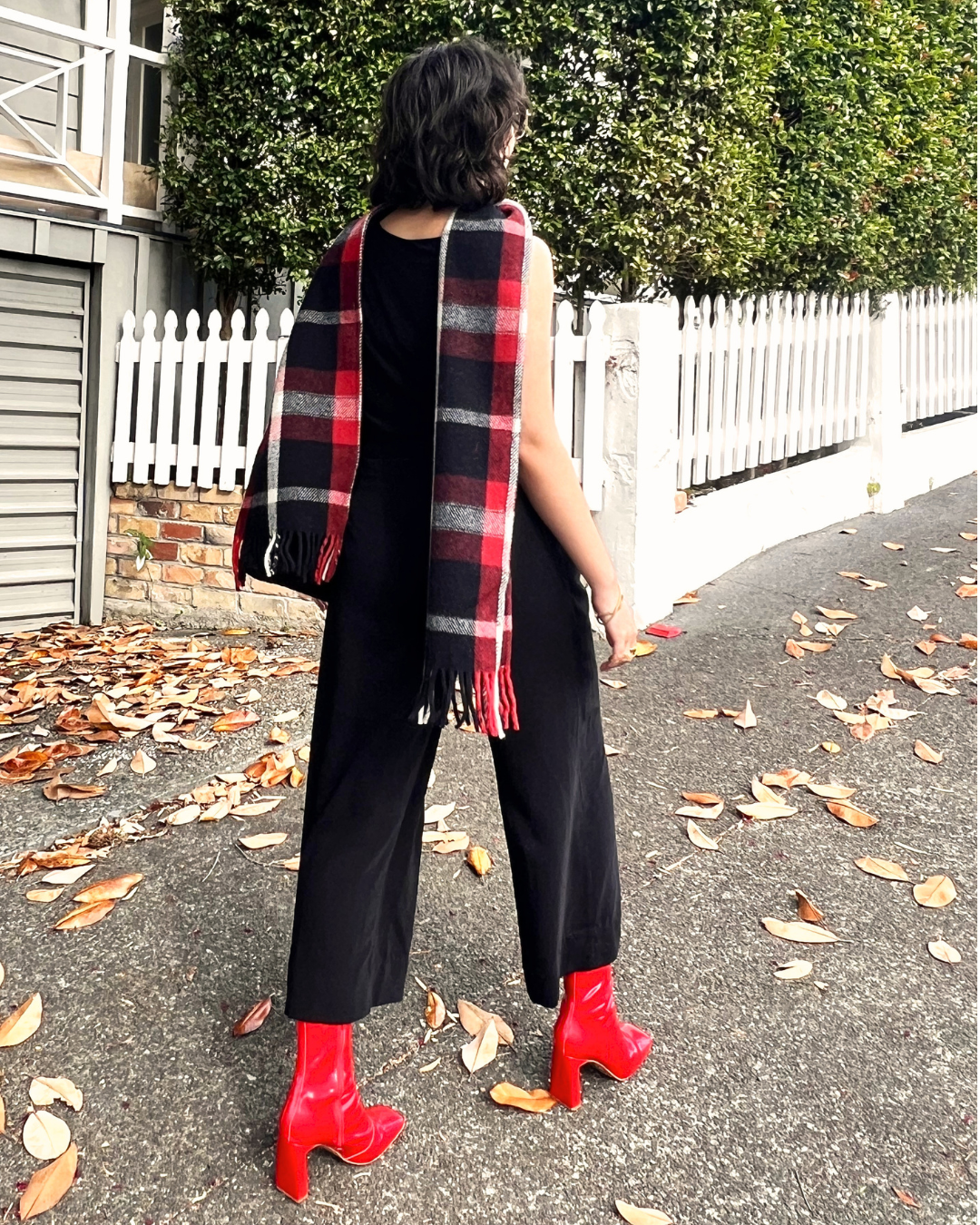
Her signature medium is the upcycled woollen blanket. A humble, historically loaded object once used as a colonial weapon of trade and assimilation. Clarkin reclaims it as a kākahu of comfort, sovereignty, and memory. Each piece is stitched with whakapapa, transforming vintage fabric into high-end couture that carries story, protest, and healing.
Clarkin’s work has been exhibited internationally at the Musée du Quai Branly, Jacques Chirac (Paris); Cambridge University Museum of Archaeology and Anthropology (UK); the Venice Biennale (Italy); and across Aotearoa in a major touring exhibition, Te Aho Tapu Hou – The New Sacred Thread (Waikato Museum, Taupō Museum, Te Uru Gallery). She has presented collections at London Pacific Fashion Week, Melbourne Fashion Week, Fiji Fashion Week, and the United Nations in Geneva.
Beyond the runway, Clarkin is the long-standing curator of annual Matariki exhibitions at Waiheke Community Art Gallery (2010–2023), Co-Chair of Piritahi Marae Komiti, and a dedicated mentor to rangatahi Māori artists and designers. Her practice bridges heritage and contemporary craft, always with an eye toward succession, sustainability, and Indigenous wayfinding.
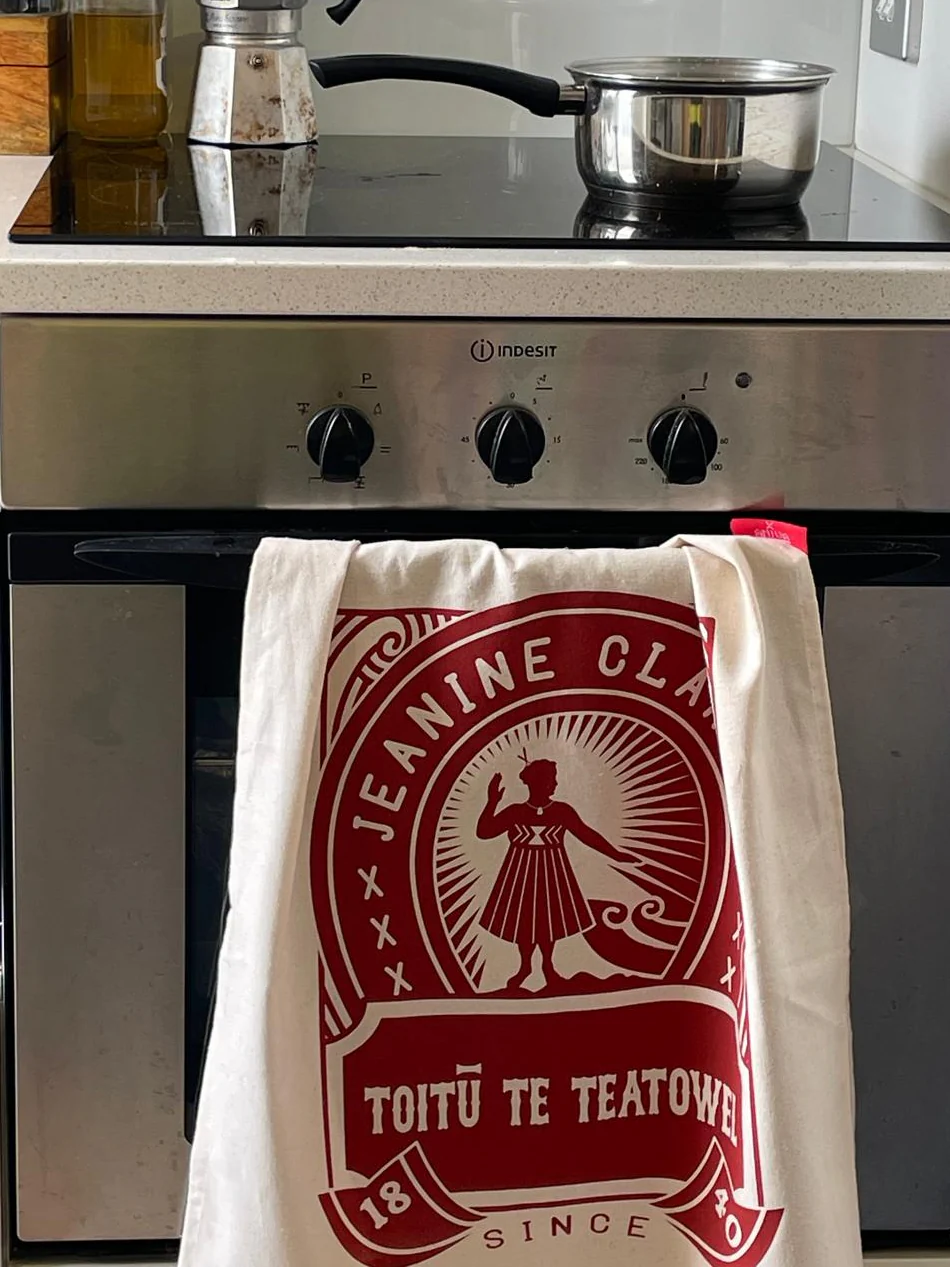
For Oyster & Moon, Jeanine Clarkin offers a rare opportunity to acquire works from a living pioneer, garments and textiles that belong in museums, yet are made to be worn, held, and passed down.
Products
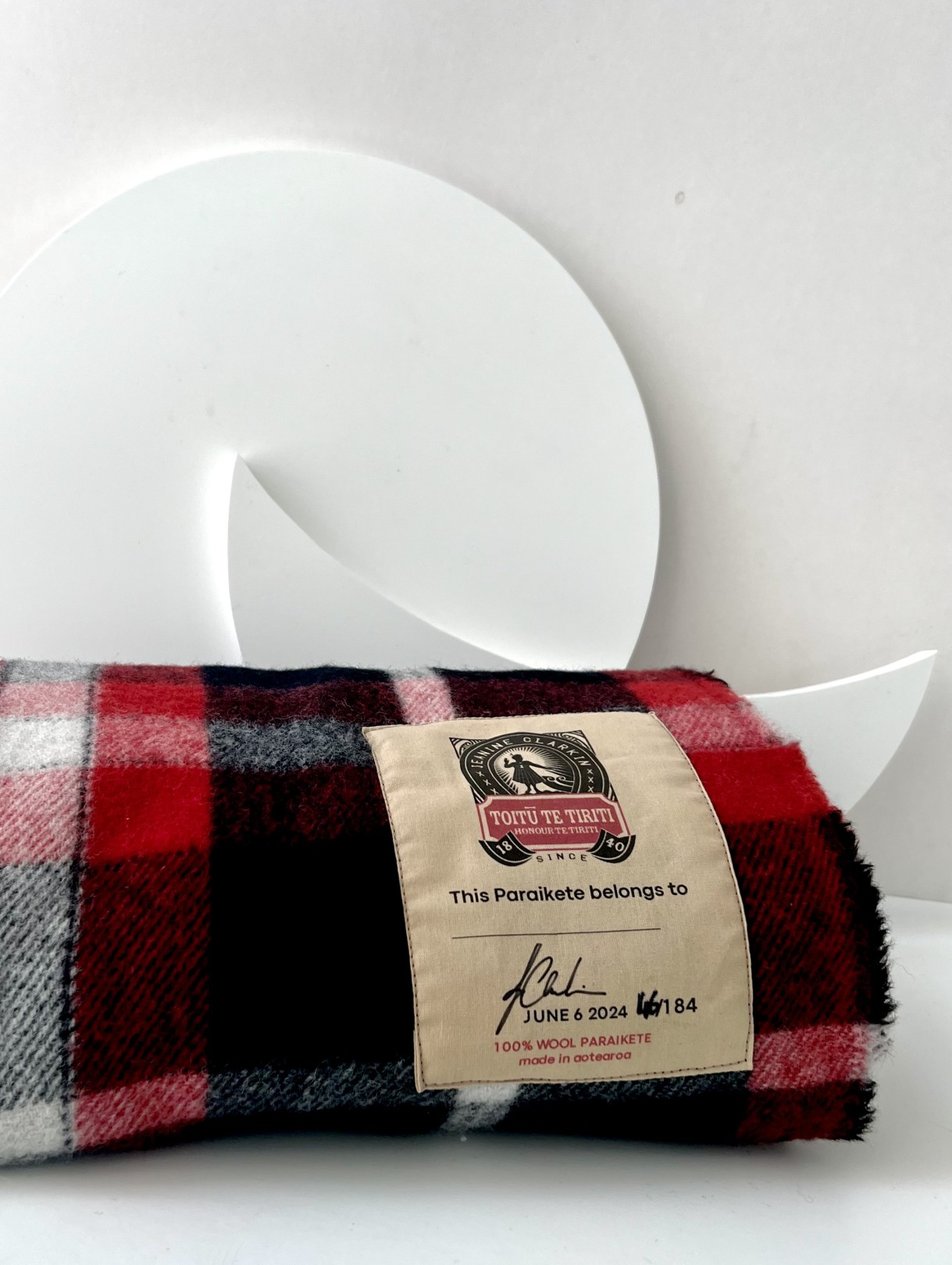
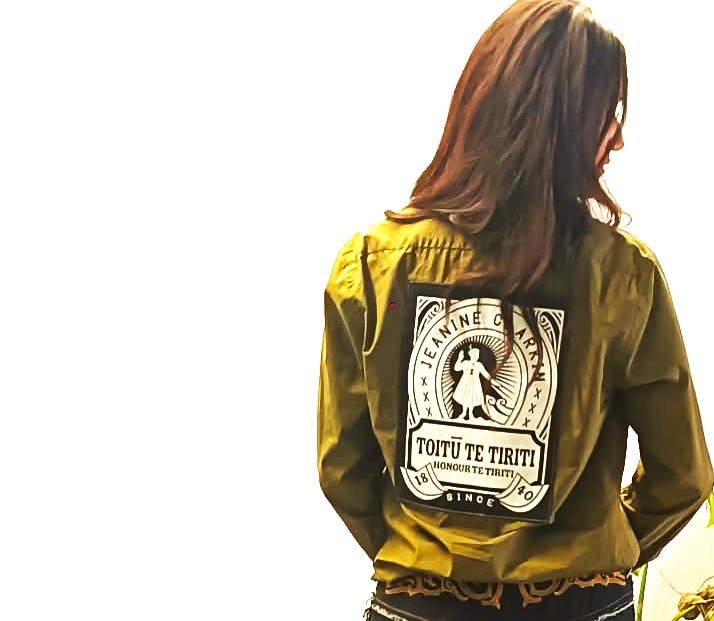
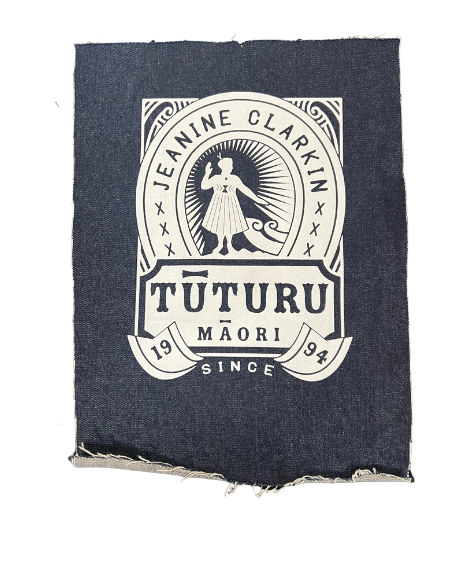
Artist Origins
| Ethnicity | Māori |
|---|---|
| Tribe/Iwi | Ngāti Pāoa, Ngāti Raukawa, Ngāti Ranginui, Ngāti Hako |